Deployment Paths Use VIE + mBedLM to run local quantized models, route across providers, and keep inference under your control from first prompt to enterprise rollout.
Start with a local execution loop, connect to your backend when you need shared services, and keep the same model workflow as you move from a single machine to a governed platform.
Deployment progression
graph TD A[Local inference] --> B[Provider configuration] B --> C[Controlled fallback] C --> D[Shared backend integration] D --> E[Governed enterprise rollout]
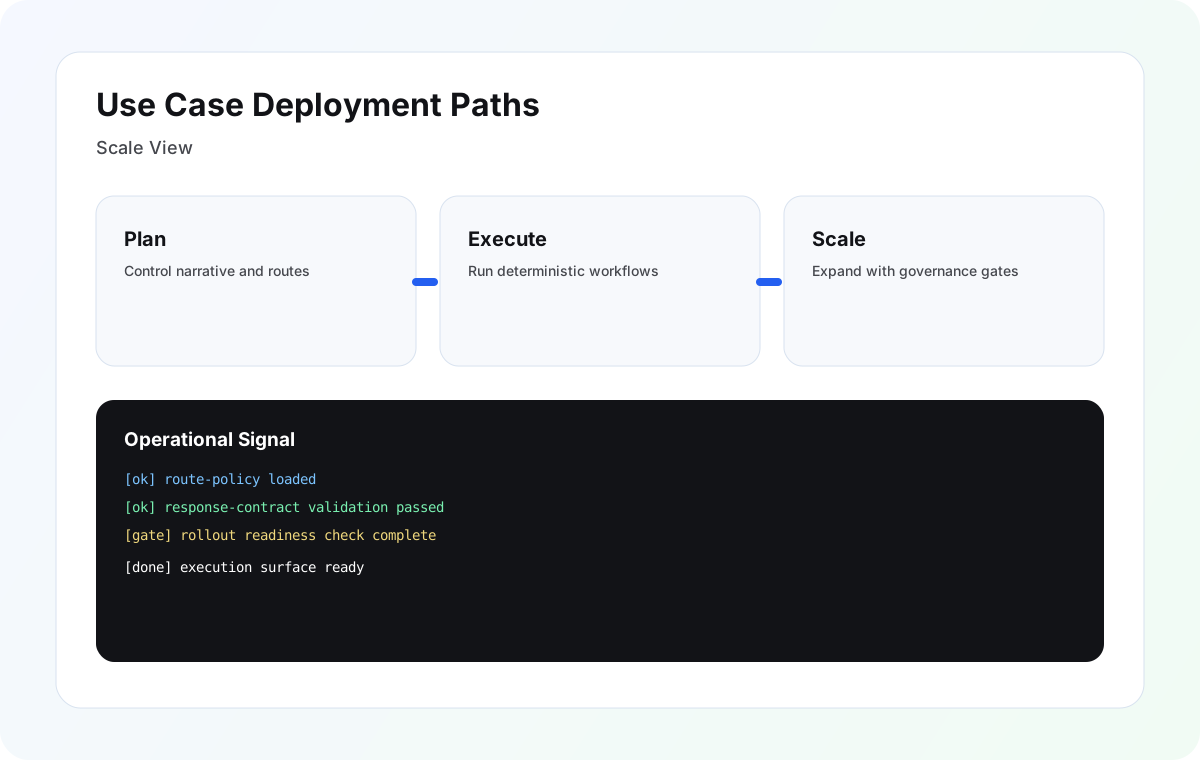
Run low-latency inference on consumer hardware, point the system at a compatible backend through MBEDLM_BACKEND_URL, and keep fast local paths available when remote providers are unavailable.
View architectureManage providers, test connectivity, sync model lists, and switch between deployments without rewriting the application flow. The provider layer gives you a single place to validate what is available and what is healthy.
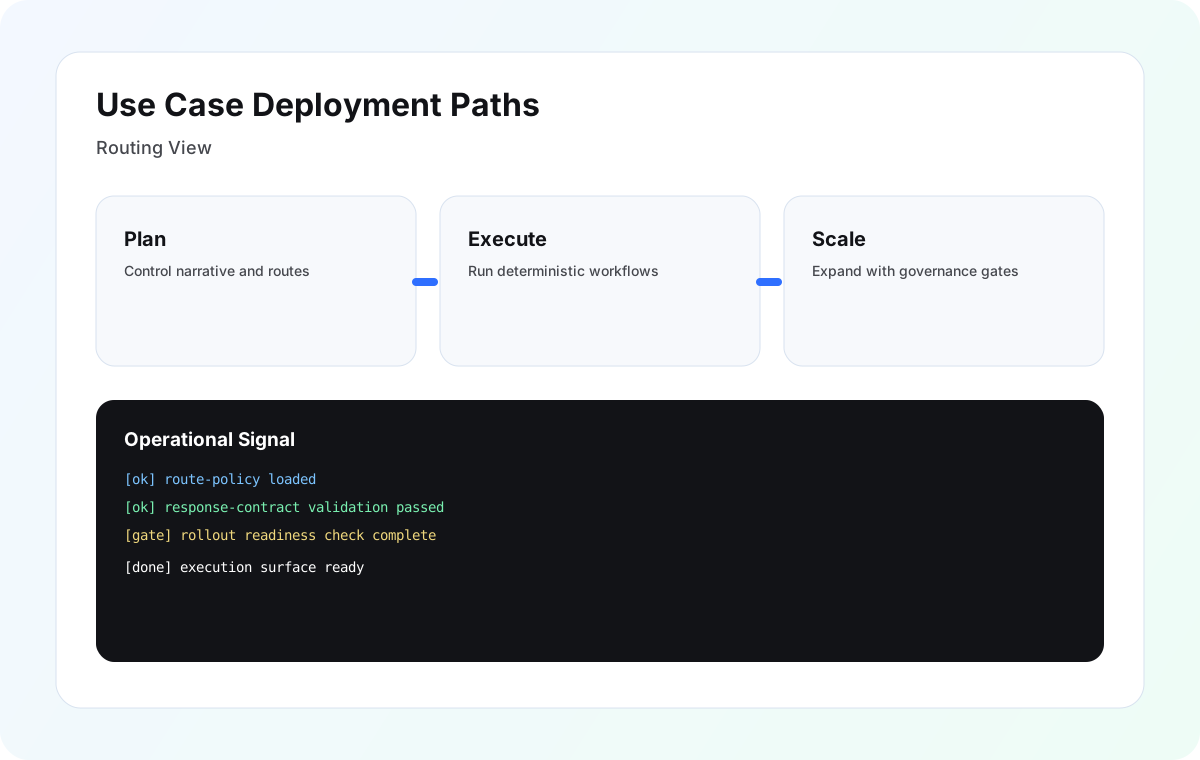
View architectureUse routing rules to prefer a primary provider, fall back when needed, and keep the execution path stable as traffic, model choice, or policy changes. This is a practical fit for teams that need predictable behavior instead of ad hoc prompt handling.
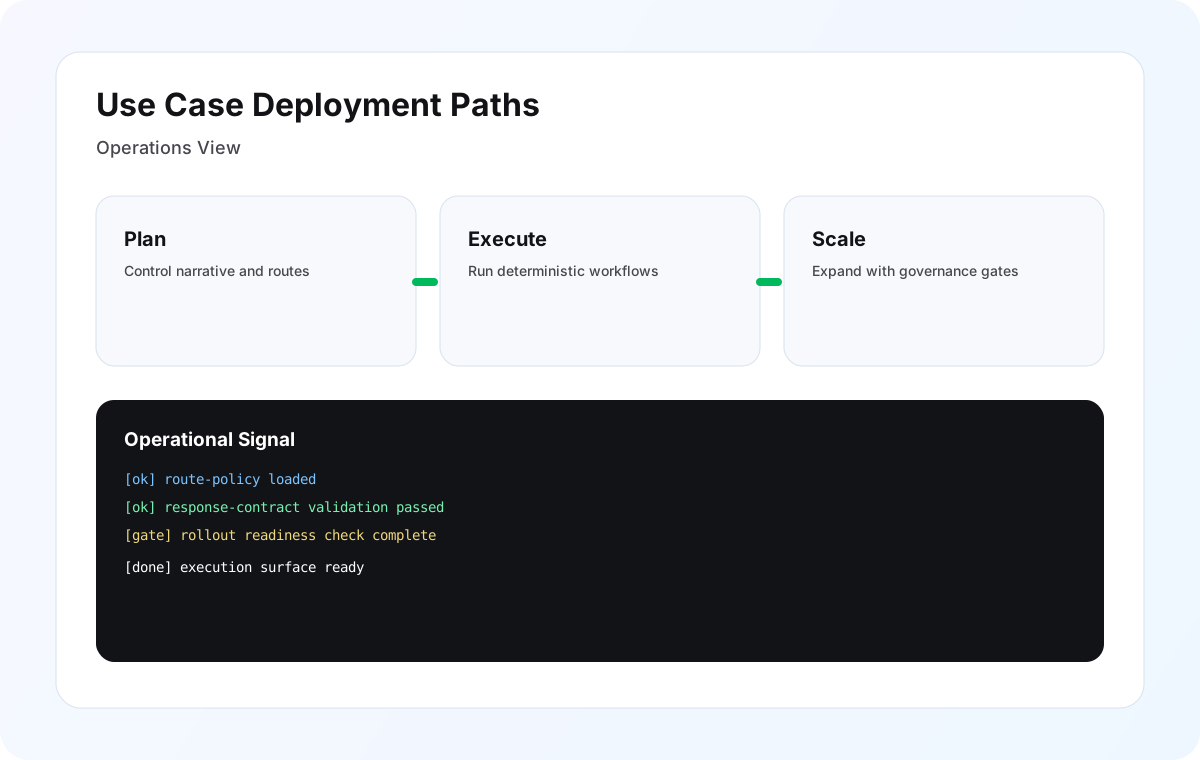
Request demo| Workflow | Execution pattern | Outcome |
|---|---|---|
| Finance support | Route eligible requests to specialist analysis backends | Higher precision on domain-specific tasks |
| Marketing generation | Run guarded generation with stable response contracts | Reusable copy outputs for campaign operations |
| OCR and extraction | Use adapter-based ingest and structured parsing paths | Document workflows with deterministic post-processing |
| Prediction and research | Blend local inference and specialist compute routes | Faster iteration with controlled escalation |
Need deeper implementation examples for your workflow?
A fintech platform team uses mBedLM to give analysts and internal operators a fast local model path for day-to-day work, then connects the same experience to a governed backend for shared access, model testing, and production rollout.
The team validates provider connectivity before enabling a model, routes traffic to a fallback when the primary provider is slow, and keeps the system consistent across laptops, staging, and production.
Start local. Route smartly. Scale with confidence. mBedLM helps teams ship faster on consumer hardware, then expand into reliable, governed deployments when the organization is ready.
Typical use-case mapping