Phase A: Context Isolation and Pre-Loading
VIE dispatches to provider-agnostic model routes while Nightjar Variable Parser applies eager loading of only relevant state, memory graph, and backend context.
Execution Blueprint how VIE, Steering, Neural Controllers, and mBedLM work as one system.
Execution model
Orchestrator: First we isolate context so we only load what is relevant.
Inference layer: Then I guide generation so outputs stay consistent and tool-safe.
State layer: After that I mutate state directly so we avoid unnecessary serialization.
System: The result is lower latency, less drift, and fewer retries.
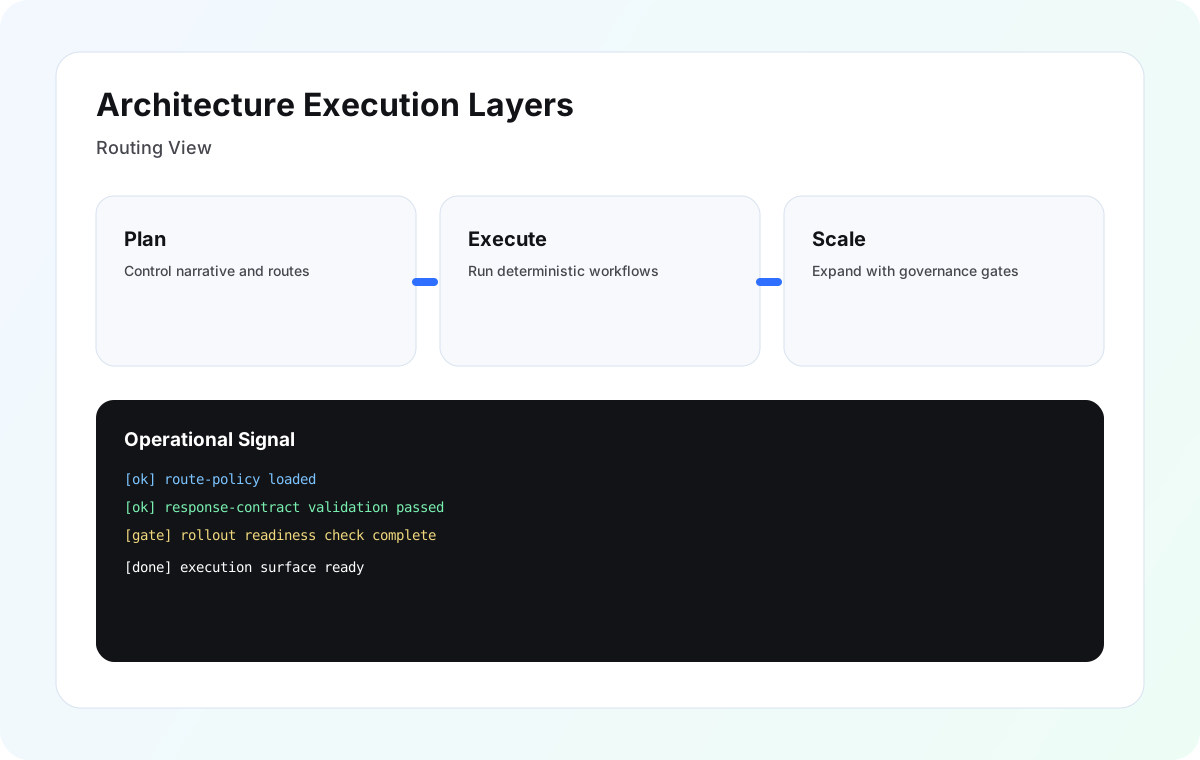
VIE dispatches to provider-agnostic model routes while Nightjar Variable Parser applies eager loading of only relevant state, memory graph, and backend context.
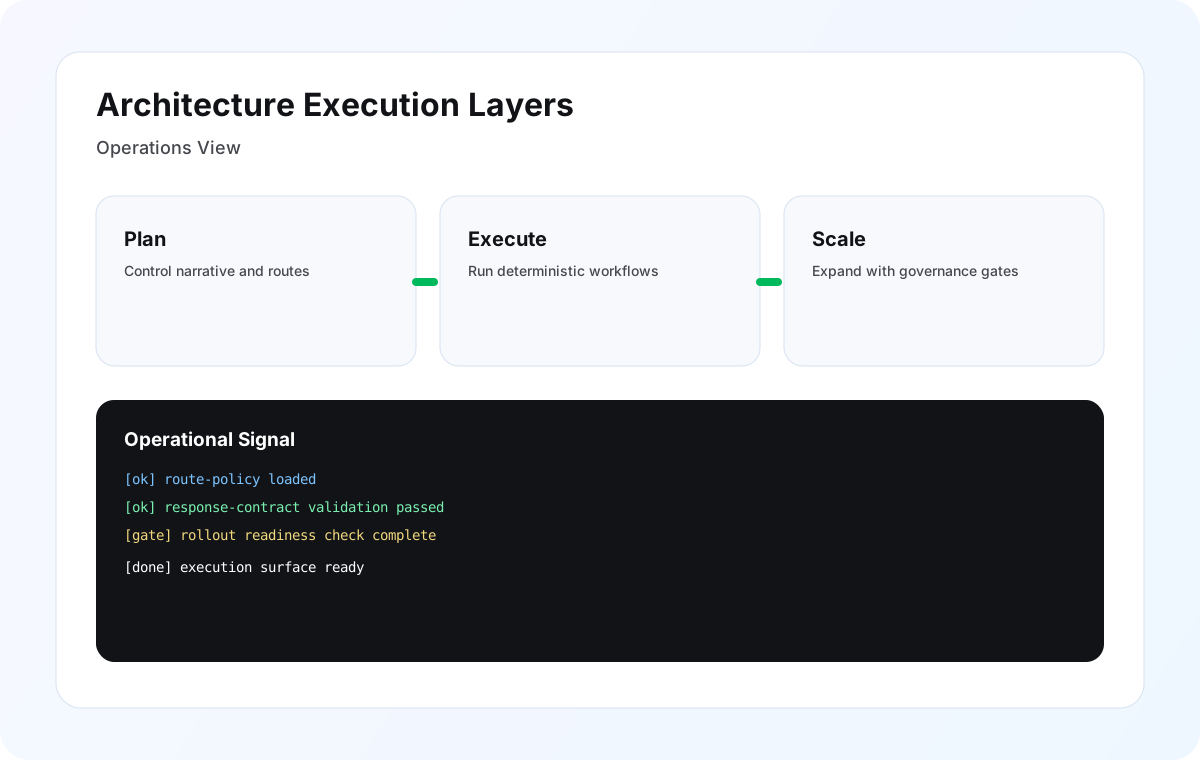
RFM Neural Controllers steer hidden-layer activations during generation to reduce drift and force syntax-consistent, tool-safe outputs on first pass.
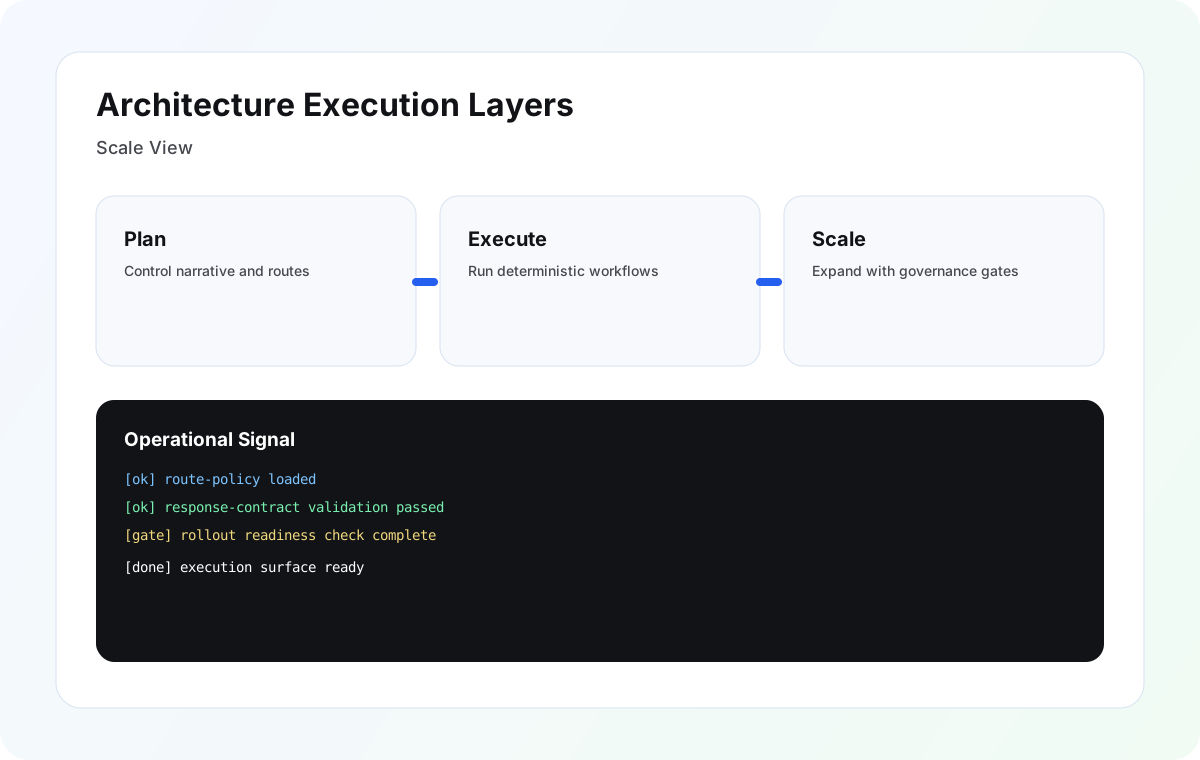
Nightjar effect handlers execute natural code state operations in-place, with control-state handoff back to VIE orchestrator via return or raise effects.
Shared memory removes serialization overhead, deterministic fast-paths reduce latency, and local GPU efficiency improves through cached effects and iteration guards.
| Boundary | Responsibility | Why it matters |
|---|---|---|
| Serving layer | Model process startup and availability checks | Prevents route selection against unavailable runtimes |
| Runtime substrate | Memory, tool interfaces, and state handoff | Keeps multi-agent coordination deterministic |
| Orchestration | Policy-aware routing and fallback execution | Stabilizes behavior across changing provider health |
| Domain adapters | Finance, marketing, OCR, and prediction paths | Lets teams add specialists without fragmenting core flow |
The system initializes configuration and secrets, verifies model and provider readiness, then enables orchestration and optional enhancers. This order reduces hidden runtime failures.
VIE provides a clear execution surface while internal runtime layers handle state, guardrails, adapters, and routing policy behind the scenes.
Architecture in one sentence
The platform separates serving, substrate, orchestration, and adapters so each concern can evolve without breaking the request contract or startup order.
Ready to implement the execution blueprint?